Introduction
When we think of Roman Hispania, images of olive oil from Baetica or gold from Asturias often come to mind. Yet along the Mediterranean coast, just north of Tarraco, lay another treasure: the wines of Laietania. This region, encompassing modern-day Barcelona and the Maresme, became one of the most dynamic centers of Roman wine production. Wine was not only a commodity to be shipped across the Mediterranean; it was also a vehicle of cultural identity and even social mobility.
In the modern municipality of Teià, north of Barcelona, lies one of the most important archaeological sites for understanding Roman viticulture in northeastern Hispania: the wine-producing complex of Veral de Vallmora. Today the site forms part of the archaeological park known as Cella Vinaria, where excavations, reconstructions, and experimental archaeology reveal how wine was produced and traded in Roman times.
The complex belonged to the ancient region of Laietania, whose wines were widely exported across the Roman Empire. Archaeological evidence shows that Vallmora was not a modest rural installation but a large and specialized production center, illustrating the industrial scale of Roman wine production.
Link license common Creatives: https://creativecommons.org/licenses/by-sa/3.0/
VALLMORA – Discovery of the Archaeological Site
The site was first discovered in 1966 by the researcher Lluís Galera, and excavations soon revealed the remains of a Roman wine estate. Archaeological research has shown that the complex functioned as a wine-production center from roughly the 1st century BCE until the 5th century CE, with its peak activity during the 1st and 2nd centuries CE.
Excavations uncovered a wide range of structures linked to wine production, including:
- Torcularia (pressing rooms)
- Calcatoria (grape-treading areas)
- Lacus (basins for collecting must)
- Dolia defossa (large ceramic vessels partially buried for fermentation)
- kilns for the production of amphorae
Altogether, archaeologists identified six presses, indicating large-scale production.
Since the early 2000s, the site has been developed as an archaeological park, allowing visitors to understand the processes of Roman winemaking through reconstructed installations and experimental vineyards.
Layout of a Roman Winery
The complex was organized on terraces adapted to the slope of the terrain and centered around a large working courtyard.
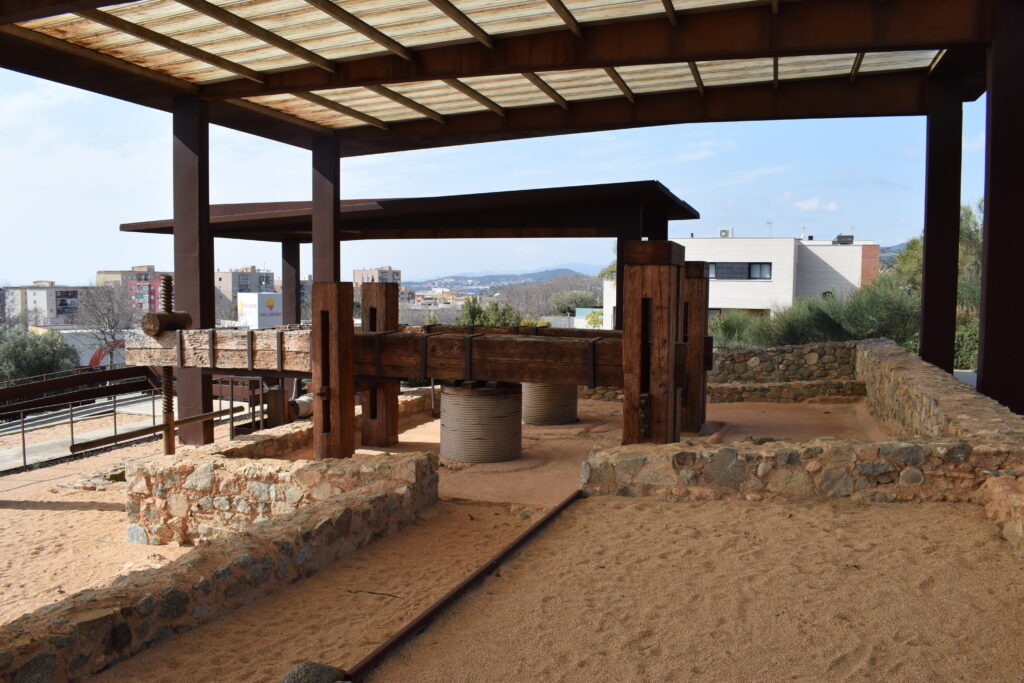
Key production areas included the pressing rooms (torcularia), where grapes were crushed using large wooden beam presses. The juice flowed into basins lined with waterproof mortar before being transferred into storage containers for fermentation.
Roman wine production followed a structured sequence:
- Grapes were treaded in the calcatorium.
- Presses extracted the remaining must using heavy wooden beams.
- Must collected in lacus basins.
- Fermentation and aging took place in dolia, enormous ceramic vessels often partially buried in the ground.
This combination of installations allowed Vallmora to function as a high-capacity agricultural estate, producing wine for regional consumption and export.
Vallmora and the Wine Economy of Roman Laietania
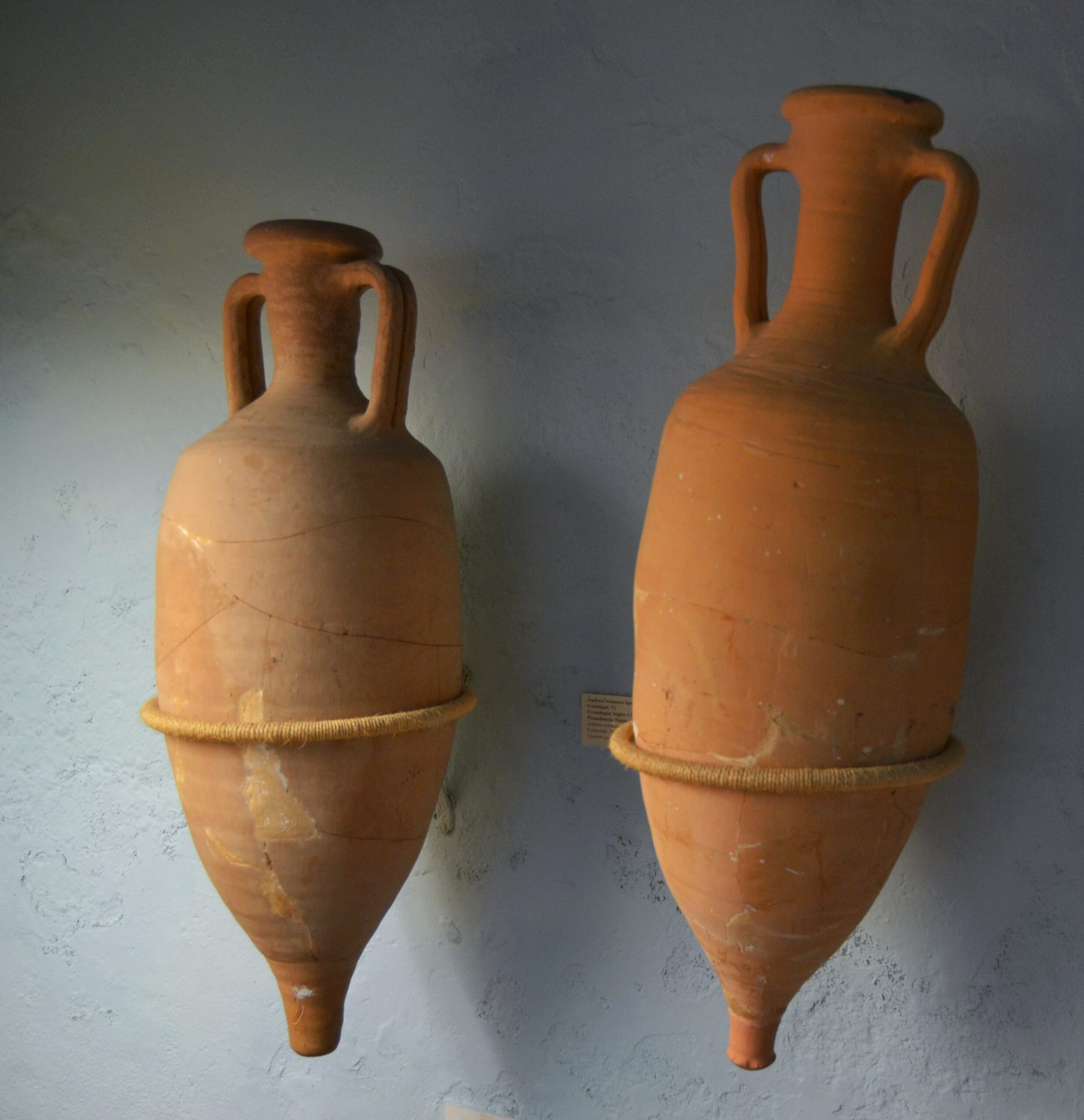
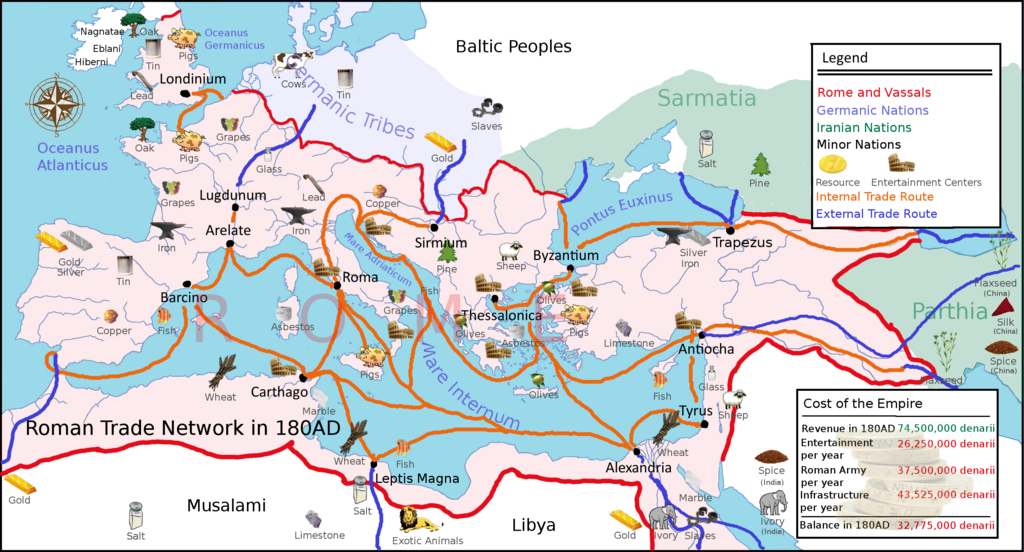
During the early Roman Empire, the coastal territories north of present-day Barcelona became one of the main wine-producing regions of the western Mediterranean. Amphorae from Laietanian wineries have been discovered throughout the empire, confirming the existence of a thriving export trade.
The scale of the installations at Vallmora reflects this economic context. The estate was likely connected to elite families in Barcino, the Roman colony that occupied the site of modern Barcelona. Archaeological evidence suggests that the winery was owned by members of the gens Pedania, one of the notable families of the city.
The Signaculum of Epictetus: A Rare Personal Story based on discoveries at Vallmora
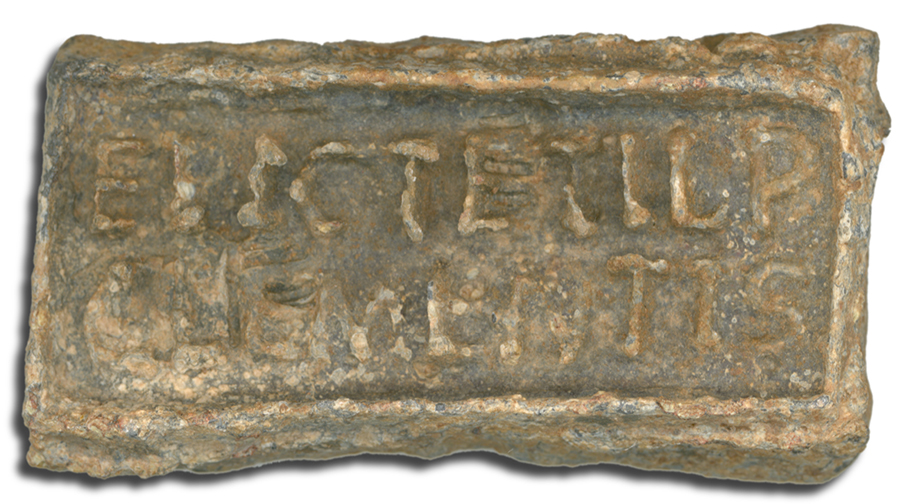
One of the most remarkable discoveries at Vallmora was made during excavations in 2003–2004, when archaeologists uncovered a lead seal (signaculum) bearing an inscription.
The inscription reads:
EPICTETUS L. PEDANI CLEMENTIS
This identifies Epictetus, a slave belonging to Lucius Pedanius Clemens, the owner of the estate. The seal likely served to mark labels attached to amphorae containing wine from the property.
This small artifact provided rare insight into the organization of the estate:
- Lucius Pedanius Clemens was the landowner.
- Epictetus, his slave, was responsible for managing the wine production.
From Slave to Freedman: Epictetus in the Epigraphy of Barcino
What makes the discovery especially significant is that Epictetus can also be identified in epigraphic inscriptions found in Barcelona.
A pedestal discovered in ancient Barcino bears a dedication from Acilia Arethusa to her husband:
“Lucius Pedanius Epictetus, sevir augustalis.”
This inscription shows that Epictetus had been freed and had risen socially, eventually becoming a sevir augustalis, a prestigious municipal religious office often held by wealthy freedmen.
The position of sevir augustalis indicates considerable economic success and social recognition. In Roman municipal society, freedmen who attained this office often belonged to the local economic elite and were involved in commercial activities.
Because the Vallmora seal identifies Epictetus as a slave managing the winery, and the Barcino inscription records him later as a prominent freedman, archaeologists can reconstruct a rare personal trajectory:
- Epictetus began as a slave managing the wine estate of Lucius Pedanius Clemens.
- Through his work and accumulated wealth, he obtained freedom.
- He later became Lucius Pedanius Epictetus, a respected member of the civic community of Barcino.
This combination of archaeological and epigraphic evidence allows historians to trace the career of a single individual across two different archaeological contexts—a rare achievement in Roman provincial history.
“The importance of the discovery of the lead signaculum at the Veral de Vallmora archaeological site in Teià lies precisely in the possibility of situating the origin of one of these fortunes in relation to a very specific economic activity, linked, especially with regard to the Pedanius Clemens branch, in the production and, perhaps, the intensive marketing of Laetian wine. The Roman wine production center documented at the Veral de Vallmora de Teià site thus constitutes, to date, a unique example in this field, which allows us to historically confirm this relationship.” (Rodà and Martín 2005: 48)
Archaeology and Social History
The story of Epictetus demonstrates how economic activity in Roman agricultural estates could provide opportunities for social mobility.
Freedmen often continued working in the same economic sector as when they were enslaved, sometimes forming business partnerships with their former masters. In the case of Vallmora, it is likely that the winery remained linked to the Pedanii family while Epictetus continued to profit from the wine trade.
Thus, the site does not only reveal the technical aspects of Roman winemaking; it also illuminates the human stories behind the economy of the Roman Empire.
The Cella Vinaria Archaeological Park Today
Today the Cella Vinaria archaeological park preserves and interprets the remains of this ancient winery. Visitors can see reconstructed presses, experimental vineyards, and exhibitions explaining Roman viticulture in Laietania.
The site provides a vivid example of how archaeology can combine agricultural history, technology, and epigraphyto reconstruct everyday life in the Roman world.
More than two thousand years later, the vineyards surrounding the nearby Alella wine region continue a tradition that began in antiquity—connecting modern Catalan wine culture with its Roman past.
_____________________________________________
Centre Enoturístic i Arqueològic
Carrer Ernest Lluch, 40
08329 Teià, Barcelona
+34 615 61 98 94
info@vallmora.cat
- Carreras, C. & Olesti, O. (2013). Esclavos y libertos en la producción vitivinícola de la Tarraconense. Barcelona: Universitat Autònoma de Barcelona.
- Martín i Oliveras, A. & Revilla, V. (2019). “The Economy of Laetanian Wine: A Conceptual Framework to Analyse an Intensive/Specialized Winegrowing Production System and Trade (First Century BC to Third Century AD).” In: M. Flohr & A. Wilson (eds.), The Economy of Roman Wine, pp. 129–164. Cham: Springer.
- Olesti, O. (2015). Epigrafía y viticultura en el ager Barcinonensis: libertos, esclavos y propietarios. In: Acta Archaeologica Barcinonensia, 30, pp. 121–144.
- Peña Cervantes, J. (2010). Producción y comercio del vino en Hispania romana. Granada: Universidad de Granada.
- Revilla, V. et al. (2017). Producción y comercio de vino en la Hispania Citerior. Tarragona: Institut Català d’Arqueologia Clàssica.
- Vallmora / Cella Vinaria Project. Museu de Teià (1999–2005 excavation reports and experimental archaeology publications).
- Blog MAC Barcelona. (2017). “Epictet, d’esclau al celler romà de Teià a llibert a la Barcino romana.” Museu d’Arqueologia de Catalunya. http://blog.mac.cat/epictet-desclau-al-celler-roma-de-teia-a-llibert-a-la-barcino-romana/
- Blanco Robles, J. (2024). Esclavitud, patronazgo y economía en la Hispania romana. Madrid: CSIC.
- Domitian’s edict: Suetonius, Domitian, 7.
- Classical references: Cato, De Agricultura; Columella, De Re Rustica; Pliny the Elder, Naturalis Historia.